How Long Does a Car Air Conditioning Condenser Last?
Short answer
A car air conditioning condenser usually lasts around 10 years, or roughly 100,000 miles. Cars driven on salted winter roads or heavily on motorways often fail sooner, from about 7 years, because road salt corrodes the aluminium fins and stone chips puncture the tubes.
Key takeaways
- Typical condenser life in the UK is about 10 years; 7–8 years is common on salt-exposed cars.
- Corrosion from road salt and stone impact damage are the two main failure causes.
- Failure is usually gradual: cooling fades over weeks as refrigerant escapes.
- Replacing the condenser with new seals and a full re-gas restores the system for another decade.
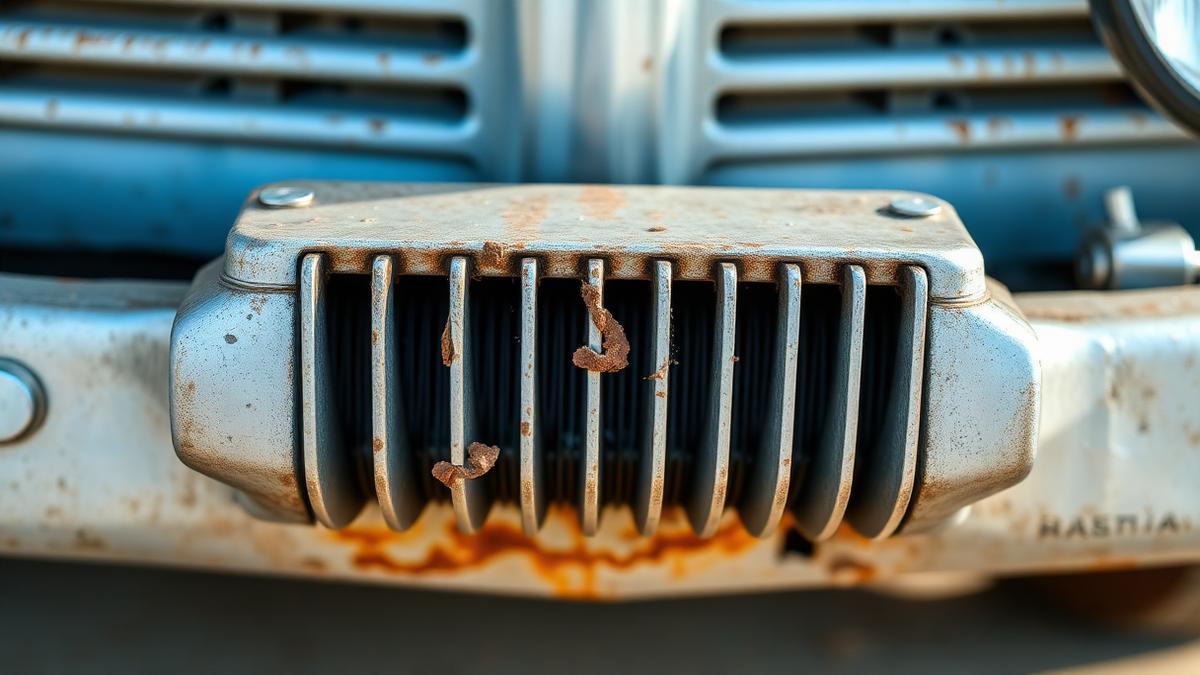
A car air conditioning condenser is a sealed, high-pressure aluminium heat exchanger mounted right at the front of the vehicle. Because it is exposed to weather, road spray and debris every time you drive, it has a harder life than almost any other part of the air con system. In our experience, a well looked-after condenser lasts around ten years. Many fail earlier, and a few lucky ones last longer.
This article explains why ten years is the typical lifespan, what pushes a condenser over the edge before then, and why replacement usually makes more sense than repair.
What is the average lifespan of a car AC condenser?
Most condensers we replace are on cars between eight and twelve years old. That makes ten years a sensible rule of thumb for the average condenser lifespan. On low-mileage garaged vehicles it can be longer; on cars that do lots of motorway miles, winter commuting, or rural driving, it can be significantly shorter.
Mileage matters less than exposure. A car driven mostly on fast A-roads and motorways will see far more stone strikes, salt spray and insect debris than a local-run town car. A condenser is only as good as the condition of its aluminium tubes and joints, and those degrade from the outside in.
Why condensers usually fail
- Stone and debris impact. The condenser sits behind the grille, in front of the engine radiator. Every stone, stick or piece of debris that gets through the grille can pierce the thin aluminium tubes. Once a pinhole opens, refrigerant and oil leak out slowly.
- Road salt corrosion. UK winters coat the front of the car with salt. Salt collects between the fins and corrodes the aluminium until tiny holes form at the joints and end tanks. This is the most common reason we see condensers fail between six and ten years.
- Vibration and fatigue. The condenser is bolted to the radiator support, but engine vibration, potholes and rough roads stress the pipework and joints over time. Cracks often appear where the metal flexes.
- Blocked or damaged fins. Leaves, insects and mud block airflow. Overheating strains the compressor and raises head pressure, which can make weak joints fail sooner.
- Previous poor repair. A condenser that has been patched, welded or overcharged in the past is much more likely to fail again. Modern micro-channel condensers are not designed to be repaired.
Can you make a condenser last longer?
You cannot protect the condenser completely, but you can slow the damage. Rinse the front of the car through winter to remove road salt, run the air con for at least ten minutes every fortnight to keep seals lubricated, and clear leaves and debris from the grille and drain channels. If you notice a small leak, get it diagnosed early rather than repeatedly topping up gas. Each top-up adds more refrigerant and oil, and the leak gets worse.
Why repair rarely works
Modern condensers use thin-wall aluminium with parallel-flow micro-channels. Welding or brazing a corroded section can seal one hole, but the surrounding metal is usually corroded to the same level. It is common for a repaired condenser to leak again within weeks or months. Replacing the unit with a new one, followed by a full vacuum and correct refrigerant charge, is the only repair we consider reliable.
When to replace instead of re-gas
If your air con only stays cold for a few weeks after a re-gas, the condenser is the prime suspect. If the car is over eight years old, has visible corrosion on the front-mounted condenser, or shows oily residue and UV dye around the fins, replacement is usually the better value than another temporary re-gas. A re-gas on a leaking system is wasted money.
What replacement should cost
Main dealers and general garages typically quote £450 to £750 for condenser replacement and re-gas because they mark the part up heavily. A cheaper, equally reliable route is to supply the condenser yourself and pay a fixed fitting price. We charge a fixed price of £229 to fit your supplied condenser, including new O-rings and seals, vacuum, leak test and full re-gas with R134a or R1234yf. Most customers buy the part for roughly £50 to £150, bringing a typical total cost to around £280.
Book a condenser replacement in Derby
We are a home-run air conditioning specialist based in Alvaston, Derby. We have carried out condenser replacements for six years for www.staykool.co.uk customers, covering thousands of vehicles across all makes and models. If your condenser is around ten years old or showing signs of failure, book a slot online with Darren.
Frequently asked questions
How long does a car AC condenser last?
Around 10 years or 100,000 miles on average in the UK. Cars regularly driven on salted roads or with front-end stone damage can fail at 7–8 years.
Why do car air con condensers fail?
Road salt corrodes the aluminium tubes and end tanks, stones from the road puncture the core, and constant pressure and vibration cycles work the seams loose. All of these let refrigerant escape.
Can you make a condenser last longer?
Rinsing the front of the car through winter to wash salt out of the condenser fins, and running the air con for a few minutes every month to keep the seals lubricated, both help.